De-addiction: Meaning and Importance
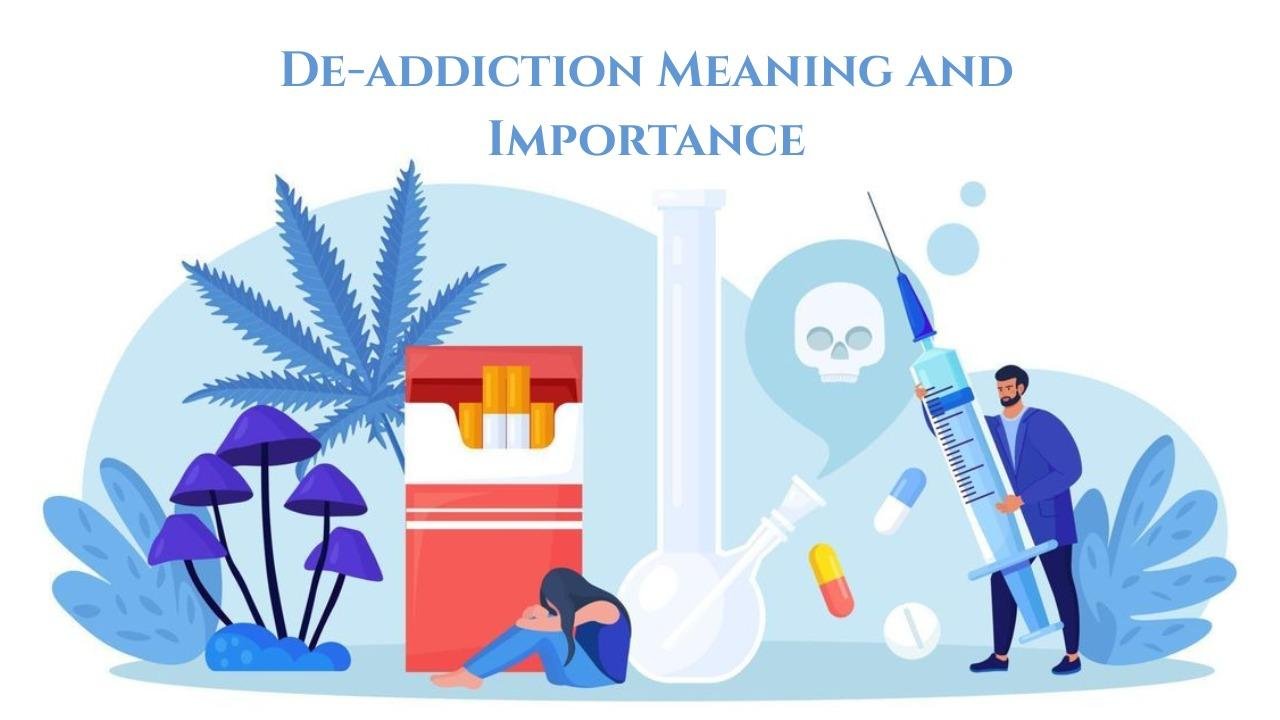
De-addiction means freedom from addiction. It is a process that helps a person overcome dependence on a substance (such as alcohol or drugs) or an addictive activity (such as gambling or gaming). De-addiction typically involves medical treatment, counselling, and support groups to help individuals gain control over their addiction and lead a healthier, better life.
Key Aspects of De-addiction
1. Freedom from Addiction
De-addiction aims to free a person from any type of addiction—whether it is related to substances like drugs or alcohol, or behavioural addictions such as gambling or excessive gaming.
2. Medical Treatment and Counselling
The de-addiction process often includes medications, individual and group therapy, psychological counselling, and life-skills training. These interventions help patients manage withdrawal symptoms, understand their triggers, and adopt healthier habits.
3. Support from Rehabilitation Centres
Rehabilitation centres play a crucial role in recovery. They provide a structured environment where trained professionals support patients in healing physically, mentally, and emotionally.
4. A Continuous Recovery Process
De-addiction is not a one-time event—it is a long, ongoing journey. It requires consistent support, motivation, and lifestyle changes to maintain long-term recovery.
5. Covers Various Types of Addictions
De-addiction is not limited to alcohol or drugs. It is equally applicable to behavioural addictions such as gambling, online gaming, or any compulsive activity that affects a person’s well-being.